




Reconciliation Week and NAIDOC Week in early learning

If your child has come home from childcare singing an Acknowledgement of Country, or telling you whose land their service stands on, there's a good chance their educators are doing this well. Aboriginal and Torres Strait Islander histories and cultures are part of everyday learning in quality Australian services, and two weeks each year bring that learning into full colour.
Here's what National Reconciliation Week and NAIDOC Week are, how early learning services celebrate them, and how your family can join in respectfully.
This year at a glance: NAIDOC Week 2026 runs from 5 to 12 July, with the theme 50 Years of Deadly, marking five decades of NAIDOC Week. National Reconciliation Week runs 27 May to 3 June every year; Reconciliation Australia announces each year's theme at reconciliation.org.au.
What is National Reconciliation Week?
National Reconciliation Week runs from 27 May to 3 June every year, the same dates each time because both bookends matter. 27 May marks the successful 1967 referendum, when Australians voted to count Aboriginal and Torres Strait Islander people in the census, and 3 June marks the High Court's 1992 Mabo decision, which recognised native title.
The week, led by Reconciliation Australia, is a time for all Australians to learn about our shared histories, cultures and achievements, and to think about how each of us can contribute to reconciliation. Each year carries its own theme, and early learning services around the country weave it into their programs.
What is NAIDOC Week?
NAIDOC Week is held in July each year and celebrates the histories, cultures and achievements of Aboriginal and Torres Strait Islander peoples. It grew out of a long movement of activism and observance, and it's now one of the biggest events on the Australian calendar, with local events, awards and the famous annual poster competition run through the National NAIDOC Committee.
Where Reconciliation Week asks all Australians to reflect on our shared story, NAIDOC Week is first and foremost a celebration of the oldest continuous cultures on earth. For children, it's often the most joyful week of the year at their service: music, dance, art, stories and community visitors.
Why do these weeks matter in early learning?
Early childhood educators are many children's first teachers outside the family, which makes early learning services one of the most natural places for children to build respect for Aboriginal and Torres Strait Islander cultures. Learning about culture and Country isn't an add-on in Australian early education; embedding it runs through the Early Years Learning Framework that guides every service's program.
Done well, it's also not confined to two weeks. The services that do this best treat Reconciliation Week and NAIDOC Week as highlights of something that happens all year.
How do early learning services celebrate?
Services celebrate in ways that connect children to the Country they learn and play on, and the educators we've spoken to show what that looks like in practice.
At Sentia Early Learning in Melbourne, four-year-old kindergarten teacher Linda Wilson runs a community-based program built around connection to Kulin Nation Country.
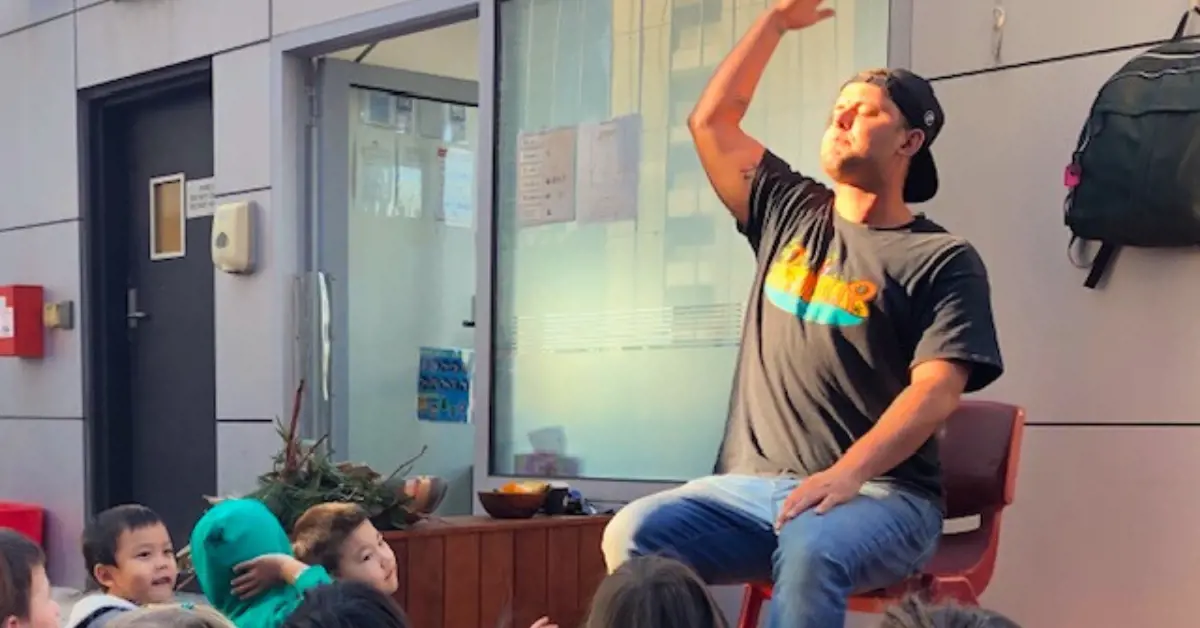
Image: Sentia Early Learning
"As Aboriginal and Torres Strait Islander peoples' connection with the land is deeply interconnected to one's own identity, wellbeing, and culture, the aim for us is to create meaningful experiences where we as teachers, children, and families are growing a greater appreciation, knowledge, and respect for the land of our community."
Her children have explored the Yarra River, local sites of importance and local art, and heard Dreaming stories of Bunjil, the ancestral wedge-tailed eagle of the Kulin Nation. One year, under the theme "Be brave, make a change", the children cleaned up their local Port Phillip Bay beach and turned the experience into an exhibition artwork. The next, for "Be a voice for generations", they created their own acknowledgement for their outdoor playground.
At Clovel Childcare and early learning, children sing and sign a daily Acknowledgement of Country:
'Here is the land,
Here is the sky,
Here are my friends,
And here am I,
We thank the Darug People for the land on which we learn and play'
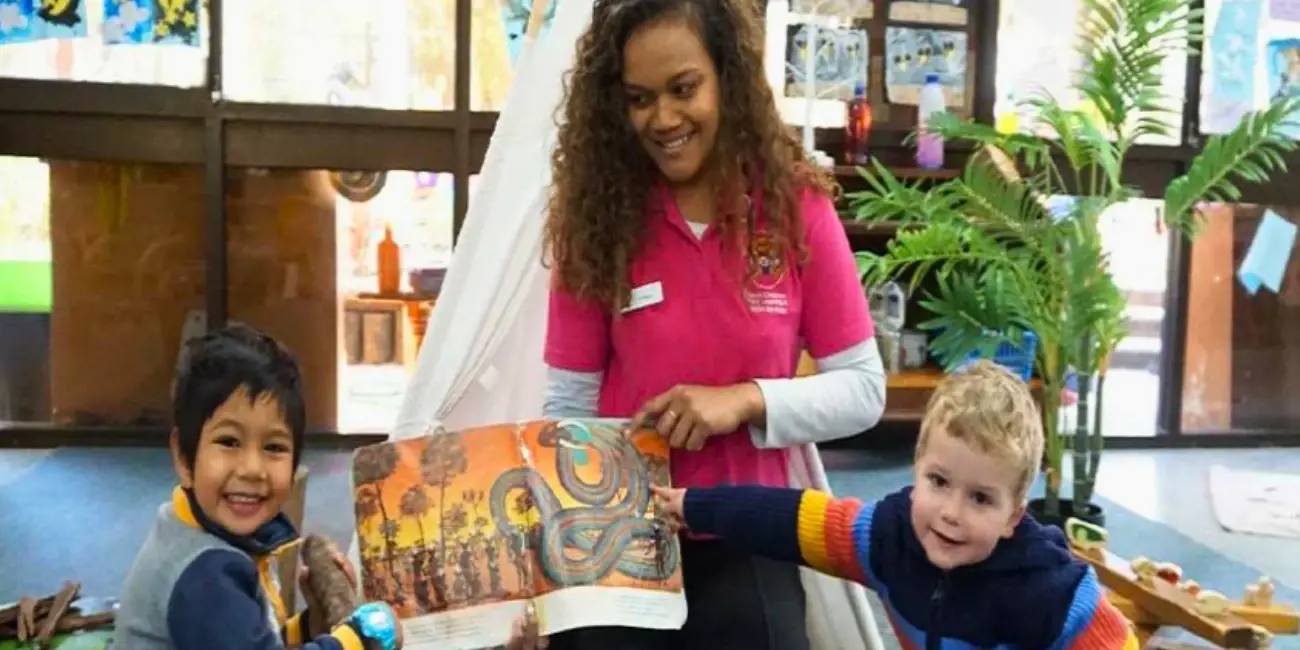
Image: Clovel Childcare and Early Learning
At Nido Early School Brabham, executive service manager Kahla Blatchford describes a kinder-yard mural representing the local community, with yongka (kangaroo) and kaarak (red tail black cockatoo), and a deliberate practice of sourcing from Aboriginal and Torres Strait Islander-owned businesses.
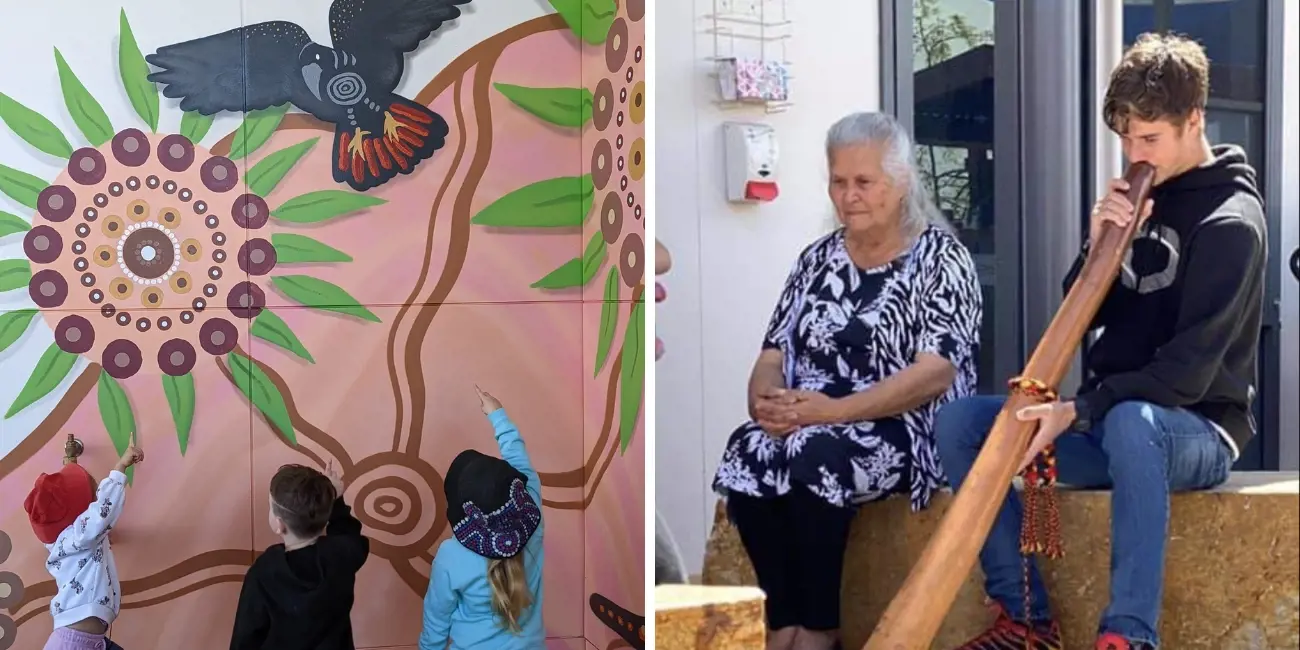
"We've had discussions around doing your research when you are purchasing something Indigenous to ensure that the company as a whole is Aboriginal or Torres Strait Islander made and designed so we know profits are going back to the community."
And at Goodstart Early Learning, national cultural liaison Melody Ingra describes what the week looks like across their centres:
"It's a deadly week of incredible events and rich learning experiences for children, involving our centre communities from knowledge holders, Elders, children and families. Goodstart centres have a range of great celebrations, from Welcome to Country with local Elders, smoking ceremonies, learning about Aboriginal and Torres Strait Islander art, to cultural experiences including learning about bush tukka."
How can families join in respectfully?
Your family doesn't need to wait for the service to bring it home. Some meaningful, respectful ways to take part:
- Learn whose Country you live on, and talk about it with your child. Many families are surprised how engaged little ones are with this.
- Go to a local event. Councils, libraries and community groups run family-friendly Reconciliation Week and NAIDOC Week events; the NAIDOC website lists local events each year.
- Read books by Aboriginal and Torres Strait Islander authors and illustrators. Your local library will have a display out during both weeks, and these books belong on the shelf all year.
- Buy from Aboriginal and Torres Strait Islander-owned businesses, and do the quick check Kahla suggests: designed and made by community, so the benefit goes back to community.
- Follow your child's lead. If they come home with a song, a story or a new word, ask them to teach it to you. Being the learner is part of the point.
How can you tell if a service embeds this all year?
A service doing this properly shows it beyond the two weeks. Signs to look for, on a tour or as an enrolled family: a daily or regular Acknowledgement of Country that children take part in, Aboriginal and Torres Strait Islander perspectives visible in the program and the environment (not just a poster in July), relationships with local community members or Elders, and educators who can tell you whose Country the service is on. It's a fair and welcome question to ask on a tour, right alongside the practical ones on your visit checklist.
Reconciliation, as the educators in this piece keep saying, lives in what happens after the bunting comes down. The songs your child brings home, the stories on the bookshelf and the name of the Country you live on are all small, real contributions, and they add up across a childhood.
Get childcare and parenting news straight to your inbox






Comments (0)